Permits
Dumpster Permits on Cape Cod, MA: Town by Town
The state fire-code permit, Board of Health hauler rules and the street rules in every Cape town from Bourne to Provincetown. Driveway first.
Sizing · 7 min read
Rent a dumpster that is too small and you may need extra hauls. Order one that is too large and you pay for space you do not use. Here is how we match the size to the job when you call.
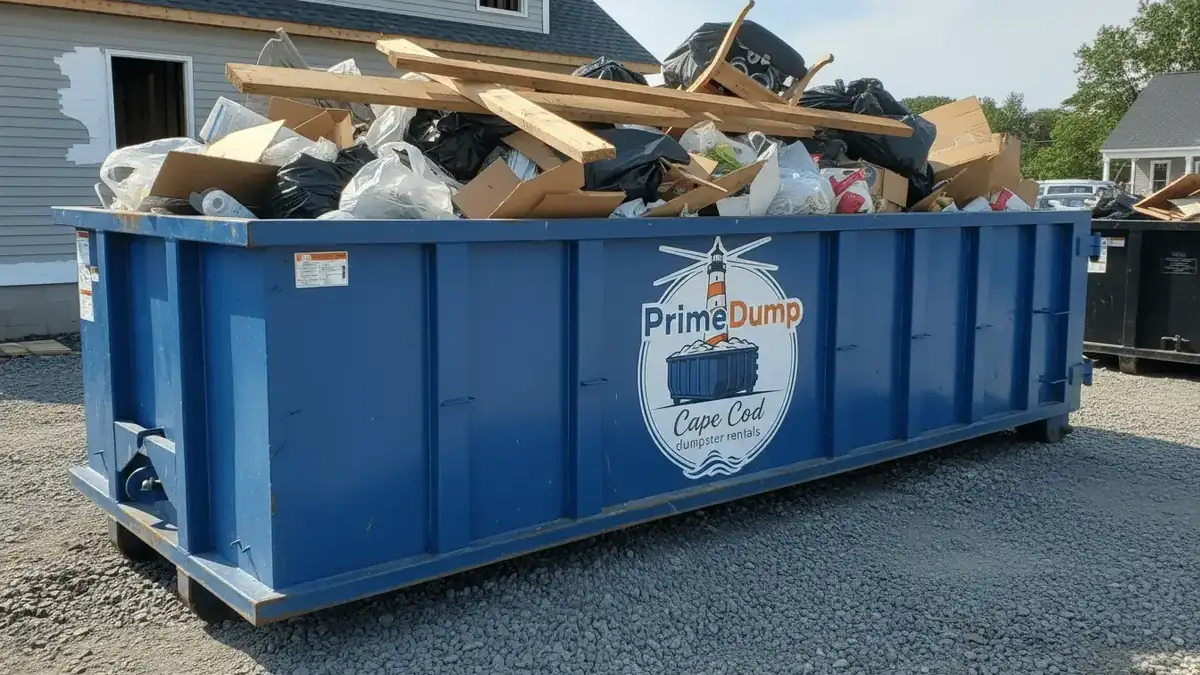
For most home projects on Cape Cod, the 20 yard dumpster is the place to start. When customers are unsure which size to choose, it is often the best option: it is one of our most requested sizes, it handles a wide range of jobs, and it fits in most driveways while holding a substantial amount of debris — multi-room renovations, roofing tear-offs, landscaping and yard cleanups, and estate cleanouts. Go 10 yard for a bathroom or small kitchen remodel, flooring, tile or carpet removal, limited shingle disposal, a garage, attic or basement cleanout or a small handyman job. Go 15 yard for medium renovations, deck removal, flooring and carpet disposal and single-room remodels. Go 30 yard for new home builds, major renovations, full-house cleanouts, commercial remodeling and large roofing projects, and 40 yard for commercial construction, demolition, multi-unit renovations and large estate cleanouts. Not sure? Call (508) 388-1861 and we help you pick.
A few rules of thumb from the jobs we see. A roof replacement around 2,000 square feet is usually a 15 yard. A kitchen remodel is a 10 or a 15, a whole house cleanout a 20, and new construction or demolition a 30 or a 40. Most single-room renovations fit a 15 or a 20, while whole-home projects may need a 30. Most residential yard cleanups fit well in a 10 or a 15, and larger properties may want a 20. And if the job grows, we can arrange a swap or an additional container.
All five are open-top roll-offs about 8 feet wide. The 10 and 15 are shorter boxes; the 20, 30 and 40 share a length of about 22 feet and simply get taller. Pickup truck loads are a rough guide to volume. The weight column is the limit a rental typically includes, which depends on the debris type.
| Size | Approx. L × W × H | Holds about | Typical weight limit | Typical job |
|---|---|---|---|---|
| 10 yard | 12' × 8' × 3.5–4' | 3 pickup loads | Up to 2–3 tons | Bathroom and small kitchen remodels, small cleanups, limited shingles |
| 15 yard | 14' × 8' × 4.5–5' | 4–5 pickup loads | 2–3 tons | Garage cleanouts, flooring, deck removal, single-room remodels |
| 20 yard | 22' × 8' × 4.5' | 6 pickup loads | 3–4 tons | Multi-room renovations, roofing, yard cleanups |
| 30 yard | 22' × 8' × 6' | 9 pickup loads | 4–5 tons | Major renovations, full-house cleanouts, new builds |
| 40 yard | 22' × 8' × 8' | 12 pickup loads | 5–6 tons | Commercial construction, demolition, multi-unit work |
Most people under-count the pile. Walk the house or the job before you call, estimate how many pickup loads you expect, and tell us what the material is. When we recommend a size we look at the debris type, the estimated volume, the weight and the project duration, so you do not pay for unused space and still have room to finish. We focus on honest recommendations, not upselling.
Volume and weight are two separate limits. Furniture and household junk are bulky and light; concrete, dirt, brick, tile and roofing shingles can quickly exceed weight limits, often before the box looks full. Each rental includes disposal within an included weight limit, and additional disposal fees may apply if the dumpster exceeds the included weight allowance. Light household debris can usually be mixed, but heavy materials such as concrete, brick or roofing should be discussed in advance, and our team helps you estimate the weight before delivery to avoid overage fees. Concrete, brick or asphalt go in approved limited quantities, within the weight limit.
Keep debris level with or below the top edge. For safety reasons, overfilled dumpsters cannot be transported, and Massachusetts law requires a vehicle carrying rubbish or debris to have its load fully and adequately covered (M.G.L. c. 85 § 36). If you need more space, call us and we arrange a swap or an additional container. There is a Massachusetts reason to sort, too: MassDEP bans asphalt pavement, brick, concrete, metal, wood (from landfills) and clean gypsum wallboard from disposal (310 CMR 19.017), so mixed construction debris goes to a handling facility that meets MassDEP's minimum performance standard for separating it. A clean load of concrete or brick, a mixed remodel load and a household cleanout are three different loads, so tell us which one you have. Mattresses, box springs and textiles have been banned from disposal since November 1, 2022, so they stay out of every box.
Check the length first: about 12 feet for a 10 yard, about 14 for a 15, and about 22 feet for the 20, 30 and 40, all about 8 feet wide. Leave room for the roll-off truck to get in and set the box, and look up for low branches and wires over the spot. Our dumpsters are driveway-safe, and protective boards or pads can be used to help prevent surface damage; we recommend plywood or protective boards under the contact points when the box sits on concrete, asphalt or pavers. If your neighborhood has HOA rules, limited access or a tight driveway, let us know. Our drivers place the container where you want it, and we recommend not moving it after placement; if it needs to move, call us and we handle it. You do not need to be present as long as the area is accessible, so mark the spot if you will be out.
On Cape Cod, keep it on your property, and remember the fire code. Under the state fire code, a rubbish container over 6 cubic yards needs a permit from the head of the fire department unless it is delivered and removed in the same business day (527 CMR 1.00, Table 1.12.8.5), and every size we rent is 10 yards or more. In Falmouth, the Fire Department's inspector checks that the dumpster is at least 10 feet from the building and is not an obstacle to egress. Barnstable's Board of Health wants stored rubbish kept at least 10 feet from an abutter's property line (Reg. § 353-4), a good guide for any driveway. The street is a different matter, town by town, and Route 6 and most of Route 28 are state highway, where MassDOT has no permit for a container. The permit guide covers every town we serve.
Every Cape town runs a transfer station, and none is built for a roll-off of debris. Falmouth's Waste Management Facility on Thomas B. Landers Road, next door to our yard, is for Falmouth residents only, all waste must have originated in Falmouth, and construction debris comes in by the barrel or the pickup or trailer load; whole-structure demolition and concrete and masonry rubble are on its unacceptable list (§ 191-5). The Barnstable Transfer Station in Marstons Mills takes building materials from Barnstable structures only in vehicles no larger than 5 cubic yards, and does not take asphalt pavement, concrete or bricks. The Mashpee Transfer Station does not accept demolition or building materials, and Sandwich's lists brush and demolition material as prohibited.
Further down the Cape it is the same story. Yarmouth's Disposal Area takes construction and demolition debris by weight but no bricks, asphalt pavement or concrete. Dennis wants demolition debris cut to 4 feet, and Brewster takes Brewster-generated waste only, with lumber cut to 4 feet. Chatham accepts construction and demolition waste only from Chatham sites, with documentation. Orleans bars construction and demolition materials from vehicles with a capacity of one ton or greater (§ 185-16A). Wellfleet wants a Transfer Station sticker, a gate inspection and lumber cut to six-foot lengths, and Truro takes no construction debris at all. A roll-off is for the pile that is bigger, heavier or sooner than any of that allows.
Describe the job on the phone, with the materials, the scope and the timeline, and we recommend the size that fits. Changing sizes is easiest before delivery, so call us as soon as the plan changes. If the project grows after the box arrives, we can arrange a swap or an additional container.
From this guide
A kitchen remodel is usually a 10 or a 15 yard. A full kitchen or bathroom remodel, or several rooms at once, often suits a 20, and whole-home renovations may call for a 30.
A roof replacement around 2,000 square feet is usually a 15 yard. Shingles are heavy and can quickly exceed weight limits, so tell us the roof size and what is coming off and we help you estimate the weight before delivery.
Most residential yard cleanups fit well in a 10 or 15 yard, and larger properties may want a 20; keep yard waste as its own load. A garage cleanout is usually a 10 or 15, and a whole house cleanout a 20.
Usually. It is about 22 feet long and 8 feet wide and fits in most driveways. Leave room for the truck to get in, keep the spot clear of low branches and wires, and ask for protective boards if it sits on concrete, asphalt or pavers.
Keep reading
The rest of the series, same approach — official sources, no filler.
Permits
The state fire-code permit, Board of Health hauler rules and the street rules in every Cape town from Bourne to Provincetown. Driveway first.
Cost
We quote every Cape Cod dumpster by phone. What a flat rate covers, what moves the price, and the transfer station limits and permits worth knowing.
Guide
Everything in one place: how a roll-off rental works on Cape Cod, sizes and weights, fire permits and street rules, waste bans, demolition and covered loads.
Ready when you are
Call (508) 388-1861 with the address and what is going in. A quote and a delivery window before you hang up.
(508) 388-1861Open 24 hours, 7 days